About Me- Living life full of smiles and laughter! :)

Monday, July 28, 2014

Hazardous Chemicals

Image result for pcb

Polychlorinated biphenyl

Polychlorinated biphenyl (PCB) are man made  chemicals consisting of carbons, hydrogen, and chlorine atoms. Due to their beneficial chemical properties, PCBs were widely used by industrial companies and applications. In 1979, PCBs were banned in the United States because of heightened health risks associated with PCB contamination. Currently PCBs are located in river sediments and floodplain soil.  As a result these chemicals can be found  in the fish and food that we eat. PCBs enter the air, water, and soil during manufacture and leaks from products created by the industrial companies. After entering into the environment, PCBs are hard to degrade due to their complex structure leading to bioaccumulation. Anyone who eats fish is at risk for PCB contamination and should learn how to reduce risks related to PCBs. Learning how to properly cook and clean fish is one way to reduce PCB consumption.

Helpful Links
http://www.epa.gov/housatonic/understandingpcbrisks.html#WhatArePCBs

Interesting Virus


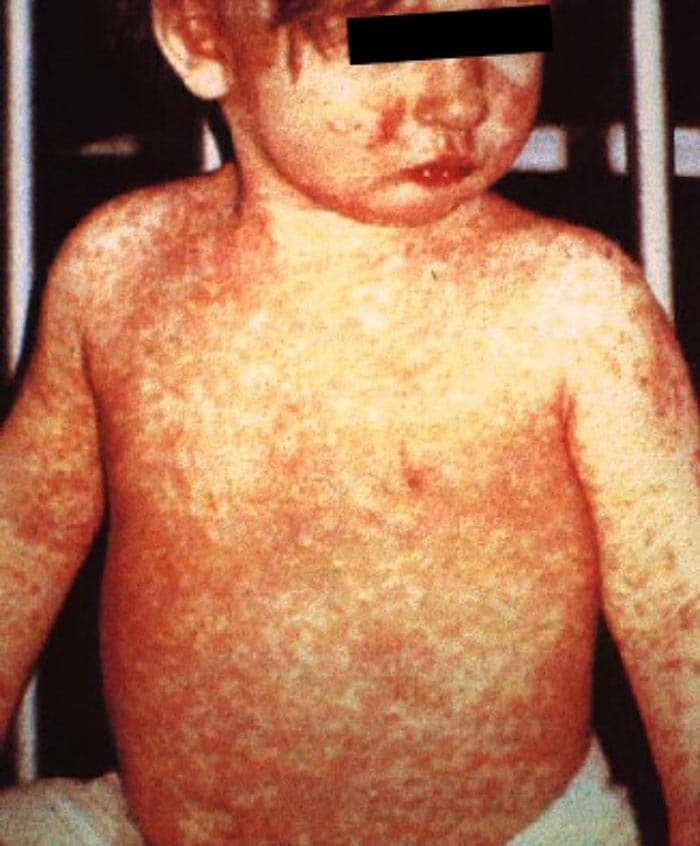
    The Measles Virus This child shows a classic day-4 rash with measles.


The measles virus is a single stranded, negative sense, enveloped RNA virus of the genus Morbillivirus and the main cause of the measles virus.  The natural host for the measles virus is humans. Measles is highly contagious and can spread through the air.  Normally, the virus grows in the back of the throat and lungs.  When someone infected with measles sneezes, the droplets from the sneeze go into the air and enter through a new host’s nose or throat after the new host touches an infected surface. Before the 1950s, nearly all children acquired measles before the age of 15, 450-500 people died from the measles and 1,000 suffered brain damage or deafness. Currently, only 60cases a year are reported in the US. In developing countries measles affects 1 out of 4 people due to more cases of malnutrition and vitamin A deficiency. It is also the leading cause of blindness in Africa.Worldwide, there are estimated to be 20 million cases and 164,000 deaths each year, with most of the deaths occurring in India. 


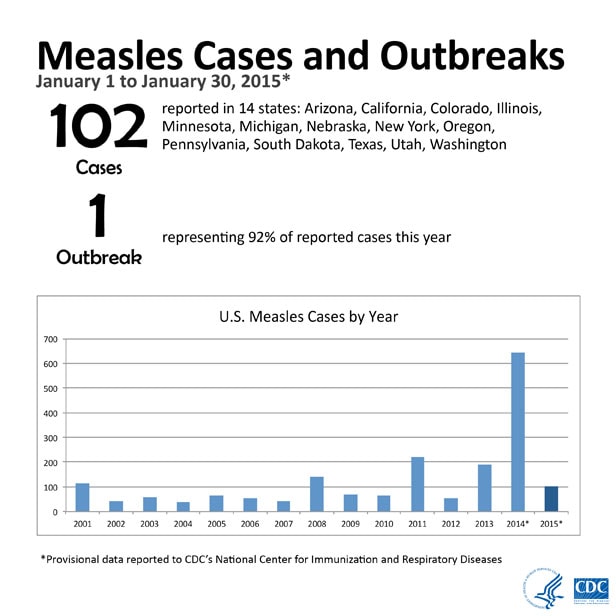
Measles cases and outbreaks from January 1-July 25, 2014. 585 cases reported in 20 states: Alabama, California, Connecticut, Hawaii, Illinois, Kansas, Massachusetts, Minnesota, Missouri, New Jersey, New York, Ohio, Oregon, Pennsylvania, Tennessee, Texas, Utah, Virginia, Wisconsin, and Washington. 18 outbreaks representing 89% of reported cases this year. Annual reported cases have ranged from a low of 37 in 2004 to a high of 220 in 2011


Virus Life cycle


Transmission


Complications, Signs and Symptoms

Some common symptoms of the measles virus are: blotchy rash, cough, fever, runny nose, tiny white spots with bluish-white centers found inside the mouth (Koplik’s spots), and conjunctivitis. These symptoms normally occur within 7-14 days after infection. After development, 30% of measles cases are complicated by pneumonia, ear infections, diarrhea.

Treatment

Although there is no treatment for measles, after a few days the symptoms disappear. The symptoms may be alleviated by antibiotics, NSAIDs, and rest.


Helpful hints
http://www.bbc.co.uk/science/0/21143412
http://immunopaedia.org.za/index.php?id=846

My Interesting Parasite


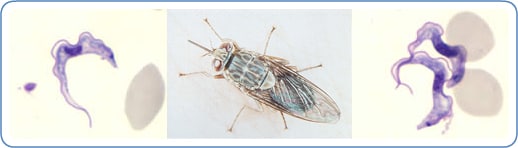
Trypomastigotes of T. brucei ssp. in a blood smear stained with Giemsa.
Close up of a Tsetse fly taking a blood meal.


Trypanosoma brucei and Sleeping Sickness


As much as I enjoy sleeping and a good nap, I would never want to get sleeping sickness. Sleeping sickness, also known as African Trypanosomiasis is caused by Trypanosoma brucei. There are two types of African Trypanosomiasis, East African trypanosomiasis by the parasite Trypanosoma brucei rhodesiense and West African trypanosomiasis by Trypanosoma brucei gambiense. These microscopic parasites are transmitted by the tsetse fly and are only found in rural Africa. In 2009, the number of new cases reported dropped to 9,878 and below 10,000 for first time in 50 years. The estimated number of actual cases is currently 30,000.  Currently, there is no universal methodology to control human African trypanosomiasis. Since the disease requires medcial staff with experience, is located in difficult access areas, and not a pandemic, WHO established a control and surveillance program that focuses on wider accessibility of people at risk to diagnosis and treatment and strengthening control and surveillance guidelines and policies. 


Life Cycle

The cycle in the fly takes approximately 3 weeks. Humans are the main reservoir for Trypanosoma brucei gambiense, but this species can also be found in animals. Wild game animals are the main reservoir of T. b. rhodesiense.
Life Cycle of Trypanosma brucei gambiense and Trypanosma brucei rhodesiense


1: The infected tsetse fly injects metacyclic trypomastigotes into skin tissue. The parasites enter the lymphatic system and passes into the bloodstream.

2-3:-Once inside the body the parasite transforms into bloodstream. Trypomastigotes. are carried to other sites throughout the body, reach other blood fluids and continue the replication by binary fission.

4-5: The entire life cycle of African Trypanosomes is represented by extracellular stages. The tsetse fly becomes infected with bloodstream trypomastigotes when taking a blood meal on an infected mammalian host

6-7: In the fly’s midgut or  the parasites transform into procyclic trypomastigotes, multiply by binary fission, leave the midgut, and transform into epimastigotes.

8:The epimastigotes reach the fly’s salivary glands and continue multiplication by binary fission.

© Vestergaard Frandsen

Signs and Symptoms

Within 1-3 weeks, the infective bite develops into a red sore. Several weeks to months later, the infected person may have fever, rash, swelling of the face and hands, headaches, fatigue, aching muscles and joints, itching skin, and swollen lymph nodes. Additionally, weight loss, progressive confusion, personality changes, daytime sleepiness with nighttime sleep disturbances, and other neurologic problems occur after the infection has invaded the central nervous system.

Diagnosis

The diagnosis depends on finding the parasite in body fluid or tissue by microscopy. T. b. rhodesiense parasites can easily be found in blood. They can also be found in lymph node fluid. It is  difficult to detect T. b. gambiense in blood. Therefore, the classic method for diagnosing T. b. gambiense infection is by microscopic examination of lymph node aspirate, usually from a posterior cervical node.


L&R: </em>Trypanosoma brucei<em> ssp. in thin blood smears stained with Giemsa. Center: A close up of a tsetse fly.

Treatment and Prevention

The specific drug and treatment course will depend on the type of infection and the disease stage. Pentamidine is the recommended drug for first stage T. b. gambiense infection. The other drugs (suramin, melarsoprol, eflornithine, and nifurtimox) used to treat African trypanosomiasis are available in the U.S. only from the CDC. After treatment patients need to have serial examinations of their cerebrospinal fluid for 2 years, so that relapse can be detected if it occurs. If treated, sleeping sickness is curable, but is fatal if untreated over months to years.

There are no medications to prevent Sleeping Sickness, but there are other ways to prevent infection, such as:
1.      Wear protective clothing, including long-sleeved medium weight shirts and pants.
2.      Wear neutral-colored clothing.
3.      Inspect vehicles for tsetse flies before entering.
4.      Avoid bushes.


Helpful links:
http://www.who.int/trypanosomiasis_african/en/
http://www.cdc.gov/parasites/sleepingsickness/






Tuesday, July 15, 2014

Rachel Carson responsible for the deaths of millions of African children

Although Rachel Carson’s intentions were good, the consequences of her actions had a major impact on lives in Africa. Malaria is a major disease carried by mosquitoes and the cause of thousands of deaths in Africa. According to WHO, ninety percent of malaria’s victims live in Africa, and most of them are children under the age of five. In Africa, one in 20 children dies from malaria. With the demise of DDT also came an increase of mosquitoes that carry malaria. DDT has proven effective in killing mosquitoes; however Carson’s description of DDT in Silent Spring hindered efforts to fight Malaria in Africa. As a result of Carson’s actions, fear and governmental policies against DDT use were implemented into society depriving people access to preventative methods for malaria.

Though Carson’s book did contribute to the increasing numbers of deaths due to malaria, it cannot be blamed as the sole cause of death of the African children. Misuse of politics, governmental policies, and funding are also contributing factors to these deaths. Additionally, although Carson fought against DDT she also stated in her book that “All this is not to say that there is no insect problem and no need of control. I am saying, rather, that control must be geared to realities, not mythical situations, and that the methods employed must be such that they do not destroy us along with insects.” This statement indicates that she suggests reducing the amount of DDT used to kill insects and not completely ban it. Therefore until more concrete evidence is available to show extreme health effects of DDT use and there is a cheaper alternative method available as a pesticide, DDT would be an ideal solution to malaria in Africa.

In conclusion, Carson’s book served its purpose to educate people about the detrimental effects of biocides, make them aware of chemical hazards and environmental issues, and to start looking for alternative pesticides. She merely made stepping stones for environmental actions. If people wanted to stop the ban then more research should have been done to prove otherwise. Rachel Carson didn’t implement the ban, the government did, and the government based some of its decision from her book. Additionally,  I would want to believe that the government made its decision to ban DDT on more concrete scientific evidence and not just a book. Therefore, technically both Rachel Carson and the government are to blame.

Another fact to consider, which was also mentioned in Carson's book, is that pests will eventually gain resistance to DDT. Even if DDT was used again in Africa, the mosquitoes there will eventually be immune to DDT and thereby still be able to carry and infect children with malaria. As a result, using DDT will have short term benefits and a new strategy will be needed to solve the malaria crisis.

References
http://rachelwaswrong.org/malaria-legacy/
http://www.bmj.com//content/321/7273/1403.1?

Rachel Carson's contribution to the Environmental Movement

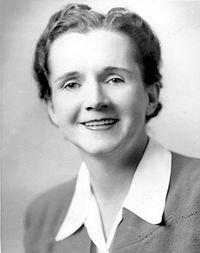
Rachel-Carson.jpg

Rachel Carson was a writer, scientist, and ecologist gifted with the ability to use her words to present scientific material and actively engage the public on environmental concerns. She was born May 27, 1907 in Springdale, Pennsylvania. She began her career as a writer and moved on to become a student of marine biology at Pennsylvania College for Women. Later she studied at the Woods Hole Marine Biological Laboratory and acquired her MA in Zoology from Johns Hopkins University in 1932. She began her career as an aquatic biologist at the U.S. Bureau of Fisheries. During her time at the U.S. Bureau of Fisheries she was a scientist and rose to become Editor-in-Chief for the U. S. Fish and Wildlife Service. She also wrote The Sea Around Us and other books about the ocean which made her a famous naturalist and science writer. 


BOOK JACKET:The Edge of the SeaBOOK JACKET:The Sea Around UsBOOK JACKET:Under the Sea-wind

As a result of her devotion to writing, Carson resigned from the government and began teaching the world about the ecology of life and the influence humans have on the environment.  She later turned her focus on conservation and the effect of synthetic pesticides on the environment. In 1962, she wrote Silent Spring which showed the impact humans on the natural world as a result of those pesticides.  This powerful book documents the effect of biocides, like DDT, that are subject to biomagnification which are detrimental to the environment. In the book, Carson also notes the health risks associated with the pesticides and blames the chemical industries for problems raised from pesticide use. Additionally, she mentions how the pests form resistance to the pesticides and later weaken the ecosystem to invasive species in various areas. Silent Spring sparked attention by both chemical companies and the government.  It led to nationwide ban on DDT and other pesticides and inspired the environmental movement. Following the release of her book, she testified before the US Senate Subcommittee of Government Operations. 88th Cong. 1st.session. in a fight against DDT in 1963. Her testimony later became the foundation of the Environmental Defense Fund, which discontinued the use of DDT in the US. This movement paved the way for the creation of the Environmental Protection Agency in order to have an organization help to regulate the promotion and use of pesticides in the agriculture industry. 
DDT banned by U.S. government in 1972

Rachel Carson on Hawk Mountain, Pennsylvania, 1945. (Rachel Carson Council, Inc.)


Although met with much opposition by her critics, Rachel Carson’s genuine efforts and contributions to the environmental movement will always be remembered and continue to be an inspiration to protect the environment today.  Rachel Carson died April 14, 1964 in Silver Spring, Maryland from breast cancer. After her death she was awarded the Presidential Medal of Freedom by Jimmy Carter.

“The human race is challenged more than ever before to demonstrate our mastery, not over nature but of ourselves.” 
 
Rachel Carson


References and Further Reading
The Rachel Carson Letters and the Making of Silent Spring http://orgprints.org/22934/7/22934.pdf
http://www.chemheritage.org/discover/media/magazine/articles/30-2-loud-and-clear.aspx

Saturday, June 21, 2014

PCB Fact Sheet


This fact sheet provides brief details about PCBs and the risks associated with the chemical hazard. I decided to put  information about PCBs that is easy to understand by people unaware of the issue. This fact sheet also provides tips on how to reduce your risk of contamination, which is beneficial to those who are around fish a lot. Additionally, the pictures used for the fact sheet help to demonstrate the purpose of the information and provide those with minimum education another way to understand what the fact sheet is about. By creating fact sheets like this one, public health professionals can educate communities about hazards that exist in their areas and ways to prevent illness associated with them. 

Friday, June 20, 2014

Cartographic maps


Thematic Mapping

 Thematic maps use different visualization techniques to show the assoication between a geographic area and a theme. Thematic maps are useful to help provide information about spatial patterns, and to compare locations. There are 4 types of thematic maps: choropleth, isarithmic, dot, and proportional symbol maps.  


Choropleth Map


Obesity has grown to become a risk factor for many chronic diseases in the United States. This choropleth map shows the prevalence of obesity in the United States for each state in 2008. A choropleth map is a useful tool that aggregates data by geographical areas. It improves communication between public health professionals and the public by using a simple visualizing technique with different colors and/or shading that represents the statistical data for the topic analyzed. In this map the variation in shading and colors represent the prevalence of obesity in each state based on the statistical information gathered by the National Center for chronic Disease and Health Promotion. The lighter colors and shading indicate a low prevalence of obesity, while the darker shading represents high prevalence rates for obesity.


Isarithmic maps


Isarithmic maps are contour maps that contain continuous and smooth phenomenon using isolines that represent constant values over geographic areas. This map is an isarithmic map that indicates hydrogen ion concentration from field laboratories in 1998.


Dot Density Map

A dot distribution map uses dots to represent the presence of a phenomenon in a geographic area. Dot maps create a visual impression of density and should be used to represent raw data. The dots on this map indicate the amount of tobacco produced in each state. In this map 1 dot represents 1,000,000 pounds of tobacco grown.


Proportional Symbol Map

                       
A proportional symbol uses symbols of different sizes to represent data relative to that location. This map shows the number of lynchings for each state from 1882-1968. The size of the symbols depends on the number of lynchings found in that state. This information is useful for formulating corresponding death rates in the United States.   


                             Environmental Sensitivity Index Map

esi map


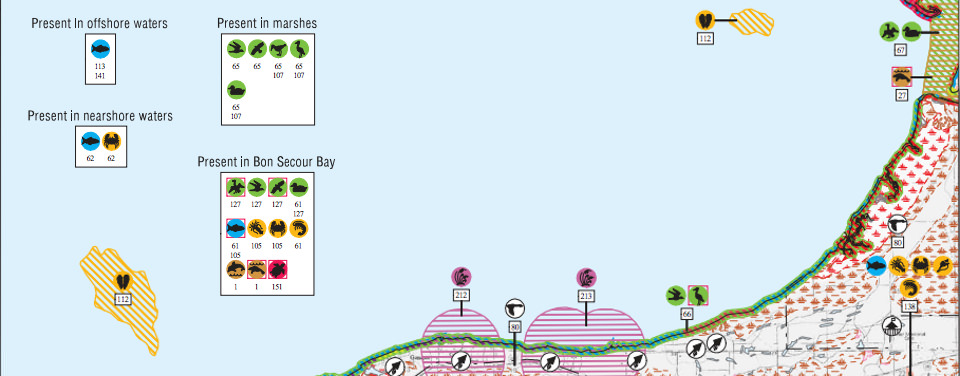
Environmental Sensitivity Index  (ESI) Map shows a compilation of coastal resources at risk for an oil spill. The information provided allows public health professionals to plan cleanup strategies before an accident occurs and save natural resources.  Shoreline are color coded to show their sensitivity to to oiling. The back of most ESI maps have tables showing when species are present in the areas shown on the front of the maps and indicate their seasonality, breeding times, and threatened/endangered status. 


References:
Heer, J. (2010, May 23). A Tour through the Visualization Zoo . Retrieved from ACMQUEUE: http://queue.acm.org/detail.cfm?id=1805128
Marzulli, F. N. (1942). THE EFFECTS OF HYDROGEN ION CONCENTRATION UPON THE METAMORPHIC PATTERN OF THYROXIN- AND IODINE-TREATED TADPOLES. Journal of General Physiology, 623-647.
National Oceanic and Atmospheric Adminstration. (2014). What is an environmental sensitivity index map? Retrieved from National Oceanic and Atmospheric Adminstration: United States Department of Commerce: http://oceanservice.noaa.gov/facts/esimap.html


Wednesday, May 28, 2014

New Zealand Adventure

I love to travel and see beautiful scenery. One place I would like to travel to is New Zealand. The pictures posted around the areas I pinpointed seem interesting and fun to explore. Hopefully, one day I'll be able to visit!!!