

Trypanosoma brucei and Sleeping Sickness
As much as I enjoy sleeping and a good nap, I would never
want to get sleeping sickness. Sleeping sickness, also known as African
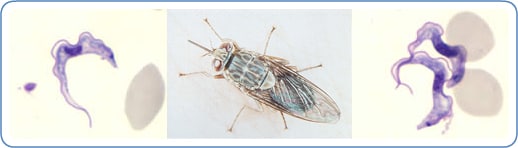
Trypanosomiasis is caused by Trypanosoma brucei. There are
two types of African Trypanosomiasis, East African trypanosomiasis by the parasite Trypanosoma
brucei rhodesiense and West African trypanosomiasis by Trypanosoma
brucei gambiense. These microscopic parasites are transmitted by the
tsetse fly and are only found in rural Africa. In 2009, the number of new cases reported dropped to 9,878 and below 10,000 for
first time in 50 years. The estimated number of actual cases is currently 30,000. Currently, there is no universal methodology to control human
African trypanosomiasis. Since the disease requires medcial staff with experience, is
located in difficult access areas, and not a pandemic, WHO established a
control and surveillance program that focuses on wider accessibility of people
at risk to diagnosis and treatment and strengthening control and surveillance guidelines
and policies.
Life Cycle
The
cycle in the fly takes approximately 3 weeks. Humans are the main reservoir for Trypanosoma
brucei gambiense, but this species can also be found in animals. Wild game
animals are the main reservoir of T. b. rhodesiense.

1: The infected tsetse fly injects metacyclic trypomastigotes into skin tissue. The parasites enter the lymphatic system and passes into the bloodstream.
2-3:-Once inside the body the parasite transforms into bloodstream. Trypomastigotes.
are carried to other sites throughout the body, reach other blood fluids and
continue the replication by binary fission.
4-5: The entire life cycle of African
Trypanosomes is represented by extracellular stages. The tsetse fly becomes
infected with bloodstream trypomastigotes when taking a blood meal on an
infected mammalian host
6-7:
In the fly’s midgut or the parasites transform into procyclic
trypomastigotes, multiply by binary fission, leave the midgut, and transform into
epimastigotes.
8:The
epimastigotes reach the fly’s salivary glands and continue multiplication by
binary fission.

Signs and Symptoms
Within 1-3 weeks, the infective bite develops into a red sore. Several
weeks to months later, the infected person may have fever, rash, swelling of
the face and hands, headaches, fatigue, aching muscles and joints, itching
skin, and swollen lymph nodes. Additionally, weight loss, progressive
confusion, personality changes, daytime sleepiness with nighttime sleep
disturbances, and other neurologic problems occur after the infection has
invaded the central nervous system.
Diagnosis
The
diagnosis depends on finding the parasite in body fluid or tissue by
microscopy. T. b. rhodesiense parasites can easily be found in
blood. They can also be found in lymph node fluid. It is difficult to detect T. b. gambiense in
blood. Therefore, the classic method for diagnosing T. b. gambiense infection
is by microscopic examination of lymph node aspirate, usually from a posterior
cervical node.
Treatment and Prevention
The
specific drug and treatment course will depend on the type of infection and the
disease stage. Pentamidine is the recommended drug for first stage T. b. gambiense infection. The other drugs (suramin,
melarsoprol, eflornithine, and nifurtimox) used to treat African
trypanosomiasis are available in the U.S. only from the CDC. After
treatment patients need to have serial examinations of their cerebrospinal
fluid for 2 years, so that relapse can be detected if it occurs. If
treated, sleeping sickness is curable, but is fatal if untreated over months to
years.
There
are no medications to prevent Sleeping Sickness, but there are other ways to
prevent infection, such as:
1.
Wear protective clothing, including long-sleeved
medium weight shirts and pants.
2.
Wear neutral-colored clothing.
3.
Inspect vehicles for tsetse flies before
entering.
4.
Avoid bushes.
Helpful links:
http://www.who.int/trypanosomiasis_african/en/
http://www.cdc.gov/parasites/sleepingsickness/

This is very interesting. thanks for that. we need more sites like this. i commend you on your great content and excellent topic choices. al hirschfeld free health clinic new york ny Useful information shared..I am very happy to read this article..thanks for giving us nice info.Fantastic walk-through. I appreciate this post.
ReplyDelete